We must explain to you how all seds this mistakens idea off denouncing pleasures and praising pain was born and I will give you a completed accounts off the system and expound.
I was born in Afghanistan, into an ethnic minority that has been persecuted for centuries. My childhood was marked by fear, hardship, and the weight of belonging to a people that others wanted to erase. When I arrived in France, I was still a minor. I did not know the language, the customs, or anyone. I was an exiled child among millions of others around the world.
It is that childhood that taught me everything. I learned that dignity is not a matter of origin, but a matter of the gaze we cast on others. I learned that justice does not fall from the sky: it is built, patiently, by those who refuse to remain silent. And I learned that exile is not an end, but a beginning — the beginning of a different way to serve one’s people.
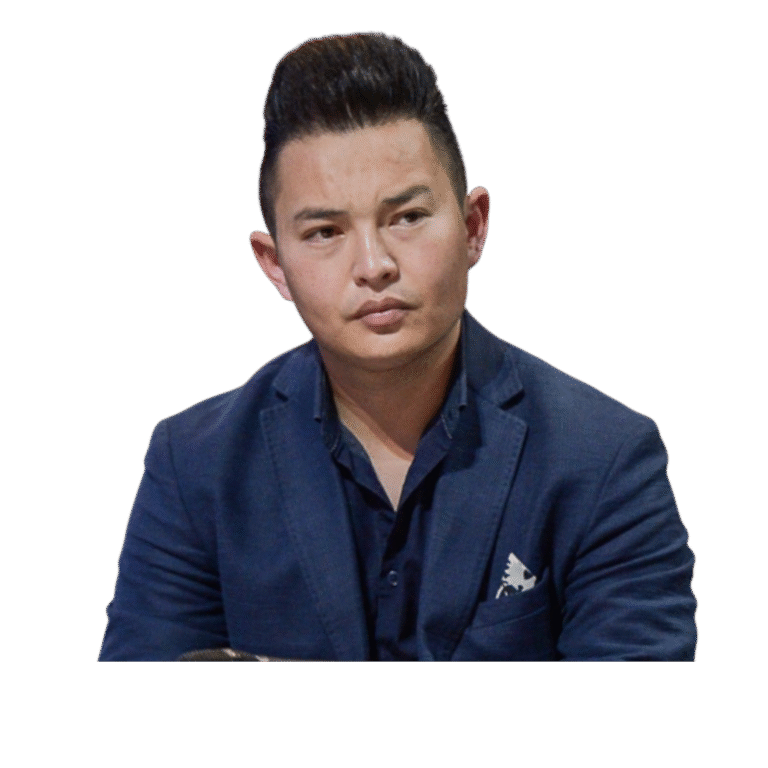
In France, I first devoted my energy to protecting the most vulnerable: children. I founded the association Enfants d’Afghanistan et d’Ailleurs (“Children of Afghanistan and Elsewhere”), because I knew from the inside what an exiled child lives through. I have dedicated my life to defending the rights of children, of minorities, of exiled persons, and of refugees.
In 2020, I became spokesperson for Afghan refugees in France — not because I represented any one ethnic group or clan, but because I carried the voice of all Afghans, without distinction. This posture of unity has guided every commitment I have made since.
That same year, I joined Europe Écologie Les Verts (EELV), the French Greens. Why the Greens? Because the values we share are universal: we grant dignity to every living being — human beings, animals, trees, the environment. Because in the green family, there are no borders: the climate crisis ignores passports, so our struggle too must ignore them. And because EELV was the only party that welcomed, without conditions, my projects for the dignified reception of exiled persons in Paris and across France.
On 15 August 2021, Kabul fell. The world watched, stunned, as the Taliban returned to power. For millions of Afghans, it was collapse.
In the months that followed, I gave myself body and soul — alongside EELV and my civil-society partners — to protect threatened Afghan women, to organise evacuations, to welcome them with dignity in France, to defend their rights from Paris, from Strasbourg, from Brussels. EELV stood with me in this work at the French National Assembly, at the Senate, at the European Parliament, and in every French city where we have pleaded the Afghan cause.
But as the months passed, one truth became unavoidable: we could not, forever, be only defenders. We had to build a political alternative — a project that says not only what we are fighting against, but above all what we are standing up for.
I have observed Afghan political life carefully. For decades, the same men have dominated it: first the warlords, then the Taliban, then the warlords’ return under American protection, and once again the Taliban. At every turn, the same families, the same clans, the same interests.
In that Afghanistan, to enter politics, you had to be someone’s son. I was no one’s son — and that is precisely why I had to build another path. Because I know that in Afghanistan and across the diaspora, there are millions of young people who are no one’s son or daughter, and who nonetheless love their country more than those who claim to lead it.
The warlords failed. The Taliban are not a solution: a totalitarian regime that seizes power by force is never a solution. There is room — there is a need — for civil society, for young people, for minorities, for women in the political leadership of tomorrow’s Afghanistan.
As for the choice of green, it imposed itself for three reasons.
Afghanistan is one of the most climate-vulnerable countries in the world — ranked 4th on the INFORM Risk Index 2023, and 8th on the University of Notre-Dame’s ND-GAIN Index (per United Nations data). Yet Afghanistan contributes only 0.06 % of global greenhouse-gas emissions (about 0.9 tonne of CO₂ per inhabitant — the 103rd largest emitter worldwide). We therefore suffer a catastrophe we did not cause.
More unjust still: since the fall of Kabul, the Taliban regime — which to date has been formally recognised only by Russia (July 2025) — has been denied the status of a full party in international climate negotiations. Afghanistan was excluded outright from COP27, COP28 and COP30, and was allowed at COP29 (2024) only as an observer-guest of the host country, without negotiating rights. While drought worsens, while the glaciers of the Hindu Kush melt, and while floods multiply, Afghanistan is deprived of voice in the very forums where its climate future is decided — including the Loss and Damage Fund created at COP27.
No Afghan party, today, places this question on the table. We will.
In a country torn apart by ethnic, religious and tribal divisions — what I bluntly call the historic cancer of Afghanistan —, ecology offers common ground. All Afghans breathe the same air, depend on the same rivers, live under the same climate. Ecology belongs to no ethnic group: it is an Afghan struggle, which is to say a human struggle.
In a country torn apart by ethnic, religious and tribal divisions — what I bluntly call the historic cancer of Afghanistan —, ecology offers common ground. All Afghans breathe the same air, depend on the same rivers, live under the same climate. Ecology belongs to no ethnic group: it is an Afghan struggle, which is to say a human struggle.
Global green politics cannot be separated from peace, democracy and human rights. The Global Greens Charter carries these values together. No ecology without social justice. No justice without democracy. No democracy without non-violence. This is a coherent doctrine, and it is the doctrine that tomorrow’s Afghanistan needs.
I held long conversations with French, Swiss, Swedish, German and Belgian Greens. All of them encouraged me. All of them told me that founding an Afghan green party in exile was not only legitimate but strategically necessary: because once the Party is officially registered, it can apply for membership of Global Greens, the worldwide federation that brings together around one hundred green parties across four continents. And from that point on, we can work, advocate, protect women and minorities, and prepare the future.
The administrative road was long. The Préfecture de Police de Paris rejected our first applications several times, for technical reasons. We started over. On 10 April 2026, registration was granted. The Afghanistan Green Party legally exists.
When the situation eases, when the time comes for a political solution for our country — because Greens around the world know that war is never a lasting solution —, we will be ready. We will return to Afghanistan with partners across the world, with a tested doctrine, with a democratic experience acquired in exile, and with a legitimacy founded not on weapons but on service.
And we will at last give voice to those who have never had one: women, young people, minorities, civil society, all those who were no one’s son or daughter, and who are nonetheless, just as much as anyone else, the people of Afghanistan.
The administrative road was long. The Préfecture de Police de Paris rejected our first applications several times, for technical reasons. We started over. On 10 April 2026, registration was granted. The Afghanistan Green Party legally exists.
Sorry, not found any campaign.
Powered by WordPress